
Which Flowers to Plant Together for a Beautiful Yard | Design Home Studio

Which Flowers to Plant Together for a Beautiful Yard
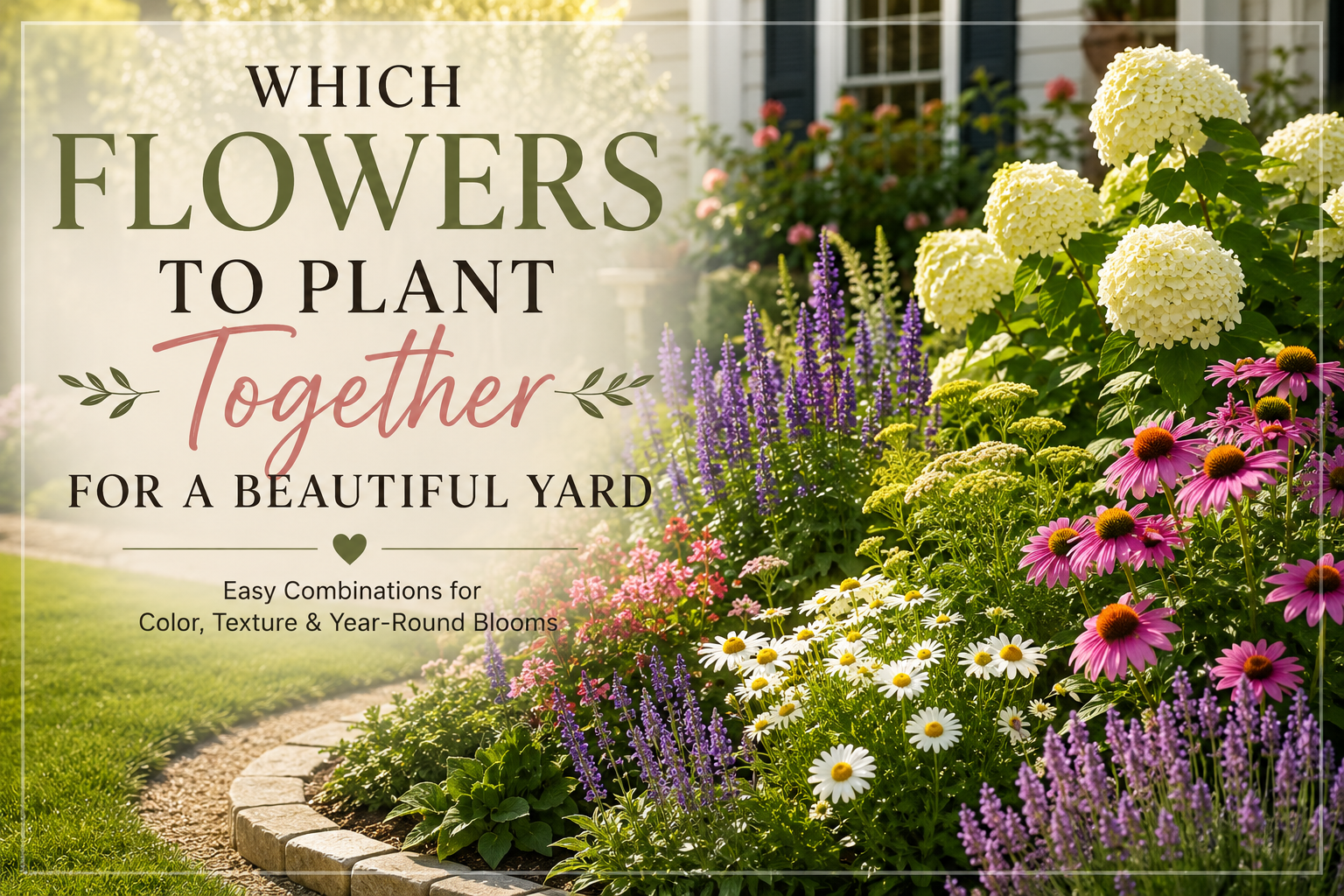
Beautiful Flower Styled Yard

The secret to a yard that looks like a professional landscape designer had a hand in it isn’t expensive plants or elaborate hardscaping — it’s knowing which flowers to place next to each other. The right pairings create color harmony, textural contrast, and a continuous bloom season that keeps your garden looking stunning from spring through fall.

This guide covers everything you need to know: the color rules that make flower combinations pop, how to layer plants by height, which specific flower pairs work beautifully together, and how to plan for blooms across every season. Whether you have a sunny front border, a shady backyard bed, or a small cottage garden — there’s a combination here for you.

Disclosure: Design Home Studio participates in affiliate programs including Amazon Associates. Some links on this site are affiliate links, meaning we may earn a small commission at no extra cost to you.

The 3 color rules that make any flower combination look designed

Before choosing specific flowers, it helps to understand the basic color relationships that landscape designers use. These three approaches each create a completely different mood — and all of them work.

🎨
Complementary
Opposite colors on the color wheel — purple + yellow, orange + blue. Creates vibrant, high-energy combinations that pop from a distance.
🌿
Analogous
Colors sitting next to each other — pink + purple + lavender, or yellow + orange + red. Creates a harmonious, cohesive flow that feels natural and relaxed.
🤍
Tonal / White
One or two colors plus white. The most elegant approach — white flowers act as a buffer between bold colors and add brightness to any combination.
Designer tip: When in doubt, add white. White flowers — whether alyssum, phlox, or white salvia — act as a natural separator between any two colors and instantly make a flower combination look more intentional and refined.

Layer by height: the front-to-back rule

Color is only half the equation. The other half is height layering — arranging plants from tallest at the back to shortest at the front, so every flower is visible and the bed has a sense of depth and dimension. This is the single most important structural rule in yard landscaping.

The Three-Layer Garden Border
Back
3–6 ft tall
Tall statement plants — ornamental grasses, hollyhocks, delphiniums, sunflowers, joe pye weed, or tall rudbeckia. These create the backdrop.
Middle
1–3 ft tall
Mid-height workhorses — echinacea, black-eyed Susans, salvia, lavender, peonies, and dahlias. The bulk of your color and texture lives here.
Front
Under 1 ft
Low edging plants — sweet alyssum, creeping phlox, lobelia, catmint, and dianthus. These soften the border edge and tie the bed to the lawn or path.
Layering tip: Plant in groups of 3, 5, or 7 of the same variety rather than single specimens scattered throughout the bed. Repeated clusters create rhythm and visual flow that makes a garden bed look intentional rather than random.

1 Lavender + Black-Eyed Susans

This is one of the most classic and foolproof flower combinations in yard landscaping — and one of the most pinned on Pinterest. The cool, silvery purple of lavender plays beautifully against the warm golden yellow of black-eyed Susans, creating a complementary color pairing that’s vibrant without being jarring. Both are also incredibly drought-tolerant and low-maintenance once established.

💜
Lavender + Black-Eyed Susans
Cool purple meets warm gold — a complementary classic
The silver-green foliage of lavender provides a beautiful textural contrast to the coarser, darker leaves of black-eyed Susans. Together they create a layered, meadow-inspired look that attracts pollinators all summer long.
Lavender
Height: 1–3 ft · Full sun · Blooms June–August · Zones 5–9 · Drought tolerant · Fragrant
Black-Eyed Susan
Height: 2–3 ft · Full sun · Blooms July–October · Zones 3–9 · Self-seeds · Attracts butterflies
Care tip: Both thrive in full sun and well-drained soil — avoid planting in wet spots. Plant lavender at the mid-border and black-eyed Susans slightly behind and to the sides for a cascading effect. Add white sweet alyssum at the front to complete the trio.

2 Echinacea + Ornamental Grasses

Coneflowers (echinacea) paired with ornamental grasses is one of the most sophisticated and low-maintenance combinations you can plant. The bold, upright blooms of echinacea in pink, purple, or white stand dramatically against the fine, flowing texture of ornamental grasses. This pairing looks spectacular from late spring all the way through winter, when the dried seed heads and grass plumes catch the frost.

🌸
Echinacea + Ornamental Grasses
Bold blooms against flowing texture — a four-season pairing
The strong vertical form of echinacea contrasts beautifully with the soft, arching movement of grasses. In summer, the pink blooms shine against green grass blades. In fall and winter, the rust-orange seed heads and golden grass become a sculptural display.
Echinacea (Coneflower)
Height: 2–4 ft · Full sun · Blooms June–October · Zones 3–9 · Native perennial · Attracts goldfinches
Feather Reed Grass
Height: 3–5 ft · Full sun to part shade · Zones 5–9 · Low maintenance · Upright, architectural form
Care tip: Place the grass slightly behind and between clusters of echinacea. In fall, leave both standing — the seed heads feed birds through winter and the dried combination is stunning with morning frost. Cut back hard in early spring before new growth emerges.

3 Roses + Geraniums (Cranesbill)

Roses paired with hardy geraniums is a combination as classic as English cottage gardening gets. Geraniums are excellent companions for roses because they help deter aphids and beetles that typically target rose blooms — so this pairing is not only beautiful but genuinely beneficial to the rose plant’s health. The low mounding habit of geraniums also hides the bare lower stems of roses, which is one of the most common complaints about growing roses in a border.

🌹
Roses + Hardy Geraniums
The English cottage garden classic — beautiful and beneficial
Hardy geraniums (cranesbill — not the tender pelargonium) form a soft, weed-suppressing carpet at the base of roses, hiding their often-bare lower stems. The small blue, purple, or pink geranium flowers complement rose blooms without competing with them.
Shrub Roses
Height: 3–5 ft · Full sun · Repeat blooming May–October · Zones 4–9 · Fragrant varieties available
Hardy Geranium (Cranesbill)
Height: 6–18 in · Full sun to part shade · Blooms May–July · Zones 4–9 · Pest-deterring · Self-seeding
Care tip: Plant geraniums in a ring around the base of each rose bush, about 12–18 inches from the cane. After the geraniums’ first flush of bloom, shear them back by half — they’ll produce fresh foliage and often a second round of flowers. This keeps the base of the roses looking lush all season.

4 Salvia + Yarrow

Blue or purple salvia paired with golden or pale yellow yarrow is one of the most stunning complementary combinations for a sunny border. The tall, vertical spikes of salvia create strong upright structure, while the flat-topped flower clusters of yarrow provide a horizontal contrast that balances the composition beautifully. Both are perennials that return reliably each year, and both are beloved by pollinators.

💙
Salvia + Yarrow
Vertical spikes + horizontal clusters — a textural masterpiece
This combination works on two levels: color (blue/purple and yellow are complementary) and form (vertical salvia spikes contrast perfectly with flat yarrow flower heads). The result is a dynamic, structured border that looks designed rather than planted.
Salvia (Sage)
Height: 18 in–4 ft · Full sun · Blooms May–September · Zones 4–10 · Deer resistant · Drought tolerant
Yarrow (Achillea)
Height: 2–3 ft · Full sun · Blooms June–September · Zones 3–9 · Drought tolerant · Excellent cut flower
Care tip: Deadhead both plants regularly to extend their bloom season. Yarrow can spread aggressively in rich soil — plant it in slightly lean, well-drained conditions to keep it in check. Both can be cut and dried for indoor arrangements, making this one of the most versatile pairings on this list.

5 Hydrangeas + Daylilies

Hydrangeas paired with daylilies create a lush, layered combination that works beautifully in a mixed border or foundation planting. The large, showy mophead blooms of hydrangeas provide drama and structure, while the more delicate, repeated-blooming flowers of daylilies add color continuity throughout the summer. This pairing is especially effective because daylilies bloom right as the hydrangeas reach their peak, creating a seamless visual transition.

🌿
Hydrangeas + Daylilies
Bold structure + long-season color — a foundation planting classic
Hydrangeas provide the structural backbone and showstopping blooms, while daylilies fill in with continuous color from early summer through fall. The linear, grass-like daylily foliage also contrasts beautifully with the large, lobed leaves of hydrangea bushes.
Smooth Hydrangea
Height: 3–5 ft · Part sun to full sun · Blooms June–September · Zones 3–8 · White to pink mopheads
Daylilies (Hemerocallis)
Height: 1–4 ft · Full sun to part shade · Blooms June–September · Zones 3–9 · Nearly indestructible
Care tip: Plant daylilies in front of and beside hydrangea shrubs, where their strappy foliage contrasts with the hydrangea’s rounded form. Choose a daylily in a complementary color — golden yellow or soft peach alongside white or blush hydrangeas is a timeless combination. Add an all-purpose fertilizer in spring to keep both plants blooming well all season.

6 Coneflowers + Black-Eyed Susans

This is perhaps the most natural-looking combination on this list — because in the wild, these two plants often grow side by side in meadows across North America. Planting them together in your yard creates that effortless, wildflower meadow aesthetic that’s incredibly popular on Pinterest right now. Both are native perennials, both are beloved by pollinators, and together they create a sea of pink, purple, and golden yellow that looks spectacular all summer.

🌻
Coneflowers + Black-Eyed Susans
The native meadow look — effortless, ecological, and stunning
Both are native prairie plants that evolved together, which means they grow in the same conditions, bloom at the same time, and look completely natural side by side. The warm pink-purple of coneflowers against the golden yellow of black-eyed Susans is a classic analogous-to-complementary transition that works from every angle.
Purple Coneflower (Echinacea)
Height: 2–4 ft · Full sun · Blooms June–October · Zones 3–9 · Native perennial · Self-seeds
Black-Eyed Susan (Rudbeckia)
Height: 2–3 ft · Full sun · Blooms July–October · Zones 3–9 · Native perennial · Extremely easy
Care tip: Plant in drifts of 5–7 plants each, alternating clusters rather than separating them into two distinct groups. Allow some self-seeding — over time, they’ll naturalize into a beautiful, self-sustaining meadow patch that requires almost no maintenance. A bag of native wildflower seed mix containing both species is a great way to start a large area for under $20.

7 Butterfly Bush + Hydrangeas

At first glance, pairing butterfly bush with hydrangeas might seem unexpected — but it works beautifully. The large, white mophead blooms of smooth hydrangea provide a stunning backdrop for the long, arching flower spikes of butterfly bush, which come in deep periwinkle, purple, or lilac. The hydrangea blooms earlier in summer and then fades to a soft green, just as the butterfly bush hits its stride from midsummer through fall.

🦋
Butterfly Bush + Hydrangeas
A surprising but stunning pairing — white and purple perfection
The Incrediball smooth hydrangea produces huge white mophead blossoms that age to a soft jade green, providing a perfect backdrop for the periwinkle-purple flowers of butterfly bush that bloom from midsummer through fall. The contrast of forms — round mopheads versus arching spikes — makes this one of the most architecturally interesting combinations you can plant.
Butterfly Bush (Buddleja)
Height: 3–6 ft · Full sun · Blooms July–October · Zones 5–9 · Attracts butterflies and hummingbirds
Smooth Hydrangea (Incrediball)
Height: 4–5 ft · Full sun to part shade · Blooms June–September · Zones 3–8 · Reblooms on new wood
Care tip: Position butterfly bush in full sun — preferably south-facing — with the hydrangea slightly to the north side where it gets a bit of afternoon shade in warmer climates. Both prefer average moisture and well-drained soil. Cut butterfly bush back hard in early spring; prune hydrangea in late winter before new growth appears.

Plan for continuous color: bloom season at a glance

One of the most common mistakes in yard landscaping is choosing flowers that all bloom at the same time — leaving the garden bare for half the year. Use this reference guide to plan combinations that keep your borders colorful from spring through fall:

Flower Bloom Season Color Sun / Shade Height
Creeping Phlox Early spring Pink / purple / white Full sun 4–6 in
Salvia Late spring – fall Blue / purple Full sun 18 in–4 ft
Lavender Early–mid summer Purple Full sun 1–3 ft
Echinacea Midsummer – fall Pink / purple / white Full sun 2–4 ft
Black-Eyed Susan Midsummer – fall Golden yellow Full sun 2–3 ft
Hydrangea Early–late summer White / pink / blue Part sun 3–5 ft
Butterfly Bush Midsummer – frost Purple / white / pink Full sun 3–6 ft
Daylilies Early–late summer Yellow / orange / red Full – part sun 1–4 ft
Ornamental Grasses Late summer – winter Green / gold / bronze Full sun 2–6 ft
Sedum / Stonecrop Late summer – fall Pink / red Full sun 6 in–2 ft

Beautiful flower combinations for shady spots

Not every part of your yard gets full sun — and that’s not a limitation, it’s an opportunity. Some of the most lush and beautiful garden combinations thrive in shade.

🌿 Best shade flower combinations

Astilbe + Hosta — Astilbe’s feathery pink or white plumes contrast dramatically against the large, architectural leaves of hosta. One of the most classic shade garden pairings. Both thrive in moist, well-drained soil.

Bleeding Heart + Ferns — The arching, heart-shaped flowers of bleeding heart in spring look ethereal against the fine, delicate texture of ferns. After bleeding heart goes dormant in summer, the ferns fill in and keep the bed looking lush.

Impatiens + Caladium — For a colorful summer shade display, pair bright impatiens in pink or white with the dramatic patterned foliage of caladiums. The caladium’s leaf patterns act as living artwork even on non-blooming days.

Hellebore + Pulmonaria — Both are early spring bloomers that thrive in deep shade. The nodding, jewel-toned flowers of hellebore and the silver-spotted leaves of pulmonaria create a sophisticated, textured combination for difficult spots under trees.

5 rules to remember when combining flowers

  • Match sun and water needs first. The most beautiful combination on paper will fail if one plant needs full sun and the other prefers shade. Always match growing conditions before matching colors.
  • Plant in odd numbers. Groups of 3, 5, or 7 of the same variety always look more natural than even-numbered plantings or single specimens scattered through a bed.
  • Think about foliage, not just flowers. Plants spend more time in leaf than in flower. A beautiful foliage contrast — fine vs. coarse, dark vs. light — will carry the design even between bloom seasons.
  • Repeat combinations throughout the border. Using the same pairing two or three times along a long border creates rhythm and visual cohesion. It’s the difference between a designed garden and a collection of plants.
  • Let some plants self-seed. Allowing echinacea, black-eyed Susans, and sweet alyssum to self-seed creates that effortless, naturalized look that’s impossible to fake. Leave the seed heads standing in fall and let nature do the planting for you.
Getting started: If you’re new to flower combinations, start with just one pairing — lavender and black-eyed Susans are the most forgiving and rewarding for beginners. You can pick up both as starter plants from a local nursery for under $30, or order a wildflower seed mix that includes both species and direct-sow in spring for an even more natural result. Build from there one pairing at a time.

Ready to design your dream flower garden?

Start with one pairing that excites you — and plant in groups of three. That’s all it takes to begin building a garden that looks like a designer had a hand in it.

Read More Garden Ideas →

Save this post to your Pinterest garden boards and tag @DesignHome_Studio when you share your yard landscaping progress — I love seeing which combinations you try!

Leave a Comment

Your email address will not be published. Required fields are marked *